How stateless connectors are reshaping agent-to-tool connections
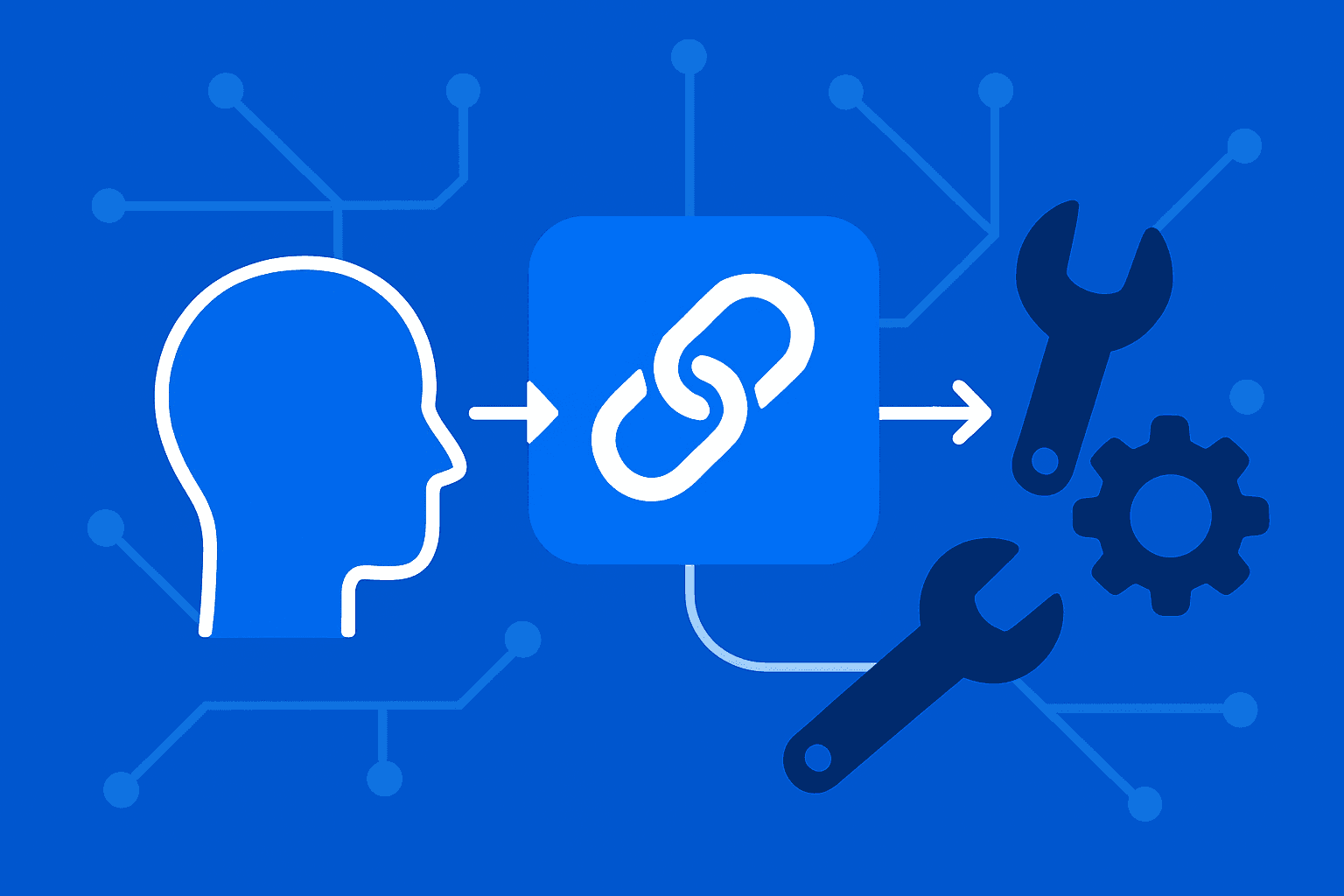
Persistent sessions have long made agent-to-tool integrations harder to scale, retry, secure, and operate than the tool call itself. Stateless connectors are changing that model by treating each agent request as a complete contract rather than as another message on a hidden, long-lived connection.
This shift matters wherever an agent must discover tools, call them through HTTP, continue work that takes time, and move across ordinary cloud infrastructure. The Model Context Protocol (MCP) 2026-07-28 release candidate makes the direction explicit: protocol core flows are stateless, version and client capability metadata travel on every request, and core deployment no longer depends on sticky sessions or a session store.
What stateless connectors mean for agent-to-tool connections
Direct answer: Stateless connectors let an agent interact with a tool server through independent, self-describing HTTP requests. Instead of relying on connection memory, the client supplies needed protocol metadata on each request and uses explicit state, such as task handles, when work must continue across multiple round trips.
A connector is often described as the bridge between an agent and an external capability: a database query, a support system action, an internal service, a search API, or a workflow. In a stateful design, the bridge commonly keeps an active session. The server may remember the negotiated protocol version, client features, authentication context, the selected tools, and the current progress of a conversation or operation.
That approach can be convenient, but it ties later requests to earlier connection history. A load balancer then needs to send the same client back to the same server instance, or the platform needs a shared session layer. Recovery behavior also becomes less obvious: a request might be valid only because of a handshake that happened minutes earlier on a particular connection.
In MCP’s newer model, the connector becomes a per-request contract. A request carries the information the server needs to interpret it under the current protocol model. The server processes the request and returns a result. If more work is necessary, continuity is represented explicitly rather than implied by an open transport.
Discovery
can be handled through tool-listing requests and cached according to the supplied
ttlMs
.
Invocation
is an explicit tool call, not an action that depends on a previously initialized socket.
Continuation
can use request state or a task handle when the work cannot finish in one exchange.
Deployment
can use ordinary HTTP infrastructure because no core request flow requires a particular server to retain connection affinity.
This does not mean that applications stop having state. Tool operations can still act on durable business records, jobs, files, permissions, and workflows. The important distinction is where continuity lives. Stateless connector design moves protocol continuity out of hidden connection memory and into explicit, inspectable request and task state.
How MCP stateless connectors replace the old handshake
The clearest technical change is the replacement of a connection-time initialization model with request-by-request capability exchange. The Go SDK describes the stateless approach as having no initialize and notifications/initialized handshake. Rather than negotiate once and assume that result lasts for the life of a connection, the protocol version and client capabilities are sent in _meta on each request.
That is a meaningful redesign, not merely an HTTP transport tweak. A server handling a request has the information needed to make a protocol decision at the moment it receives that request. It does not have to retrieve a prior negotiation record before deciding what behavior applies.
Why per-request metadata changes the operational model
Connection-time negotiation creates an implicit dependency chain: request B is understood because request A created a session. Per-request metadata makes each request independently interpretable at the protocol layer. This is especially useful when retries, failover, concurrency, and autoscaling are normal rather than exceptional.
The 2026-07-28 release candidate states that MCP protocol core is stateless and runs on commodity HTTP infrastructure. That framing is practical. Standard HTTP services, proxies, observability systems, and load balancers are built to route discrete requests. They do not need to preserve a conversational transport relationship for every agent-tool exchange.
Tool discovery becomes cache-aware
Tool discovery still matters because agents need to know which actions are available and how to call them. The new model allows clients to cache tools/list using ttlMs. A client can therefore avoid rediscovering tools for every operation while still treating the discovery response as data with an explicit lifetime.
That is different from assuming that a server’s tool catalog remains fixed merely because an old session is alive. For tool providers, the design question becomes clear: choose an accurate lifetime for discoverable tool information and ensure that a request can be handled correctly when the cached view expires or changes.
The agent obtains the available tool definitions.
The client caches that result only for the declared
ttlMs
period.
The agent sends a tool request with its protocol version and capability information in
_meta
.
The server processes the request without requiring a previous initialization exchange.
If the work needs continuation, the response supplies explicit state for the next request.
Official SDK behavior reinforces the model. The C# SDK says HTTP transport runs statelessly by default. The modern TypeScript SDK path serves the 2026-07-28 protocol on a per-request basis, while the Ruby SDK characterizes modern MCP requests as sessionless single exchanges. These defaults matter because a protocol becomes operationally real when its mainstream implementation paths make the intended behavior routine.
Why stateless HTTP makes agent tools easier to deploy and scale
Stateless transport changes the deployment choices available to teams operating agent tools. MCP servers can sit behind a plain round-robin load balancer without session affinity. Any healthy server instance can handle the next valid request because the core protocol does not expect that instance to remember an earlier connection.
For a platform team, that removes a common source of special handling. Sticky sessions may be workable, but they introduce a routing constraint that affects load distribution, failover planning, instance replacement, and capacity management. A session store can preserve continuity across instances, but it also becomes another system to build, secure, monitor, and reconcile with the connector’s behavior.
What becomes simpler
Horizontal scaling:
additional server instances can receive requests through normal load balancing rather than through affinity-aware routing.
Failure recovery:
a replacement instance can process a subsequent well-formed request without needing the failed instance’s connection-local negotiation state.
Rolling changes:
deployments do not need to preserve every live protocol session solely to keep core requests valid.
Infrastructure selection:
the connector can run on commodity HTTP infrastructure rather than requiring a persistent-stream-oriented architecture for ordinary calls.
Observability:
a request can be traced as a complete protocol event, with its relevant version and capability metadata available on that request.
These advantages do not remove the need for careful system design. A tool that initiates a durable external job still has durable state somewhere, and a multi-step business workflow still needs appropriate records. Statelessness does not make data consistency, authorization, retries, or idempotency disappear. It prevents the protocol connection itself from being the hidden place where core continuity is stored.
That distinction helps teams separate concerns. The HTTP connector layer can remain simple and scalable, while durable application state is kept in the service or workflow system that actually owns it. When a client asks for task progress, it is asking through an explicit identifier and defined API operation, not relying on the server that happened to receive the original call.
Tasks and explicit request state preserve continuity without streams
The hardest objection to stateless agent-to-tool connections is reasonable: agents often perform work that cannot finish in one request. A data extraction may take time. A workflow may require more input. A human approval or an external system may delay completion. A connector that only permits one request and one final response would be too limited for many useful agent actions.
MCP’s Tasks extension addresses that need through explicit orchestration. A server can answer tools/call with a task handle. The client then drives the task with operations such as tasks/get, tasks/update, and tasks/cancel. The task handle, rather than a persistent connection, identifies the work that needs to continue.
A multi-round-trip pattern without an open SSE stream
The new request pattern can also use InputRequiredResult. Rather than holding open a server-sent events stream while waiting for the next piece of information, the server returns a result that indicates input is needed. The client can later provide the necessary continuation through request state.
This model suits an agent because the agent is already responsible for deciding what to do next. It can inspect the result, gather missing details from the user or another tool, then issue the next deliberate request. The protocol records continuity explicitly instead of requiring a server to keep a stream open while the agent reasons.
An agent calls a tool to begin an operation.
The server either returns a completed result, an
InputRequiredResult
, or a task handle for ongoing work.
The agent evaluates the response and obtains any information needed for the next action.
The agent uses the documented task or request-state mechanism to retrieve status, update the work, provide input, or cancel it.
Each exchange remains a discrete HTTP request with the appropriate metadata.
There is an API-design consequence here. The specification removed tasks/list because it could not be safely scoped without sessions. That removal shows how statelessness shapes the public API surface. An operation that assumes a server can infer “all tasks belonging to this connection” no longer has a reliable boundary. APIs instead need explicit, safely scoped ways to address a particular task or continuation.
For connector authors, this is a useful discipline. If an endpoint only works because the server remembers an unnamed connection relationship, it needs reconsideration. Explicit identifiers and well-defined authorization scopes make the contract clearer for clients, operators, and security reviewers.
Server-initiated interaction is narrower, but more accountable
Stateful connections often encourage servers to treat a live channel as an invitation to send requests whenever they need more information. In an agent environment, that can blur control flow: the server may prompt at an arbitrary moment, while the agent may be working across several tools and user-facing steps.
The 2026 MCP release notes constrain that behavior. Server-initiated requests are allowed only while the server is actively processing a client request. This keeps elicitation tied to an existing agent action rather than turning the connector into an independent source of unexpected mid-session prompts.
The restriction is not simply a loss of flexibility. It makes the interaction boundary easier to reason about. An agent invokes a tool, the server may request additional information as part of processing that invocation, and the agent resolves that need in the context of the active action. Outside that processing window, continuation should follow an explicit request-state or task pattern.
Design tool contracts around bounded interaction
A well-designed tool contract should communicate whether it can complete immediately, may require more input, or launches work that the client must subsequently inspect. That gives the agent a dependable decision point and keeps users from seeing unexplained prompts disconnected from the action that caused them.
Use a normal result when the tool can complete from the supplied arguments.
Use an input-required result when the active tool operation needs a specific next value or decision.
Use a task handle when the work will continue beyond the initial request-response exchange.
Use cancellation and update operations as explicit controls, not as side effects of a disappearing connection.
This is particularly valuable for agents that combine multiple capabilities. OpenAI’s agent guidance emphasizes that real agents pivot among tools such as web search, data analysis, and image generation instead of relying on one monolithic connector. Clear, bounded tool interactions let an agent coordinate those capabilities without assuming that every provider shares one persistent transport context.
Stateless connectors fit composable agent architectures
Composable agents need a connection model that does not make every tool provider part of one durable session fabric. An agent may use a search tool for current information, a data-analysis tool for computation, an image-generation tool for an asset, and an internal MCP server for a business action. Each tool has its own latency, permissions, failure modes, and operational owner.
Stateless connectors support that arrangement because a tool invocation can stand on its own. The agent does not need to preserve a distinct long-lived connection state for every service merely to maintain protocol validity. Instead, it chooses a tool, sends the needed request metadata, receives a result or continuation reference, and proceeds.
OpenAI’s Agents API explicitly supports MCP connections over HTTP, including stateless HTTP servers. Its documentation shows adding an HTTP MCP server to agent.tools, and an example server uses stateless_http=True. This is an important practical signal: stateless MCP is not only a protocol direction; it is a supported integration model in an agent platform.
From connector catalog to per-action routing
For agent builders, tool selection becomes more central than connection maintenance. The agent needs a reliable view of tool definitions, arguments, results, and continuation requirements. It should select the right tool for the current action, invoke it with valid inputs, and decide whether the returned state requires another call.
That creates a cleaner division of responsibility:
The agent runtime
plans, chooses tools, retains user and workflow context, and drives follow-up actions.
The connector protocol
defines how a single tool request is interpreted and how explicit continuation works.
The tool server
authorizes and performs the requested operation, then exposes the result or task state through its contract.
The infrastructure layer
routes independent HTTP requests to available server instances.
The approach does not require every connector to be identical. Some tools will be synchronous and simple. Others will involve tasks, explicit input collection, or durable workflows. Statelessness supplies a common transport posture while allowing the operation model to be expressed clearly in the API.
Security shifts from long-lived access bridges to scoped requests
Agent-to-tool security cannot be solved by transport state alone, but statelessness changes where teams place their attention. A persistent bridge can accumulate implicit trust: once a session is created, later calls may rely on the existence of that connection as part of their context. A stateless design favors explicit request validation and explicit continuation references.
That direction aligns with a broader industry move away from treating long-lived provider tokens as the default answer for agent access. Vercel said that agent access has traditionally relied on long-lived provider tokens when it announced the general availability of Connect on August 25, 2026. The relevance is architectural rather than product-specific: agent access patterns are increasingly being designed around narrower, purpose-specific interactions.
Questions to ask for every tool request
What identity and authorization information must the server validate for this request?
Can the requested action be authorized independently of a previous transport connection?
If the server returns a task handle, who is permitted to get, update, or cancel that task?
Does a retry risk repeating a side effect, and how will the tool’s own operation contract handle that risk?
What tool metadata can a client cache, and for how long under
ttlMs
?
These questions are not new to distributed systems, but stateless connectors make them unavoidable in the protocol design. The server cannot quietly rely on a session object to provide meaning. It needs a valid request and a clear model for any durable resource the request addresses.
Teams should avoid mistaking “sessionless” for “context-free.” Authentication, authorization, user intent, business policy, and task ownership remain essential context. The goal is to make that context explicit and appropriately scoped, rather than to retain it as opaque memory in a persistent connector process.
Where stateless agent-to-tool connections have trade-offs
Statelessness improves deployability and makes core protocol behavior easier to distribute, but it introduces design obligations. The connector cannot automatically recover every nuance of a prior interaction from a live session. If a later request needs continuity, that continuity must be represented through a task handle, request state, a durable application record, or other explicit data defined by the tool contract.
Anthropic’s 2026 enterprise AI report describes the general trade-off: traditional stateless systems scale well but lose context on interruption. That is why stateless connector design needs more than a simple “no sessions” rule. It needs intentional mechanisms for preserving the specific continuity that matters while refusing to make the network connection the source of truth.
Common limits to plan for
More explicit API design:
operations that once depended on session-local knowledge need identifiers, scoping rules, and continuation endpoints.
Client responsibility:
the agent client must retain and use task or request-state information when an operation spans multiple exchanges.
Careful caching:
a cached tool list is useful only until its declared
ttlMs
lifetime ends.
Bounded prompting:
servers cannot treat an idle, persistent connection as a channel for arbitrary later elicitation.
Stateful application work still exists:
long-running jobs and business workflows require durable ownership outside the transport layer.
There are situations where a persistent channel may still be useful at another layer of a product, such as a user interface requiring live updates. That does not change the core connector model. A team can use a separate delivery mechanism for UI updates while keeping agent-to-tool protocol calls stateless and explicit. The key is not to conflate a product’s streaming needs with a requirement for hidden protocol session state.
Official SDK guidance is a practical warning against accidental hybrid designs. The C# documentation notes that stateful-only properties have no effect without a session. When an SDK is operating statelessly by default, connector authors should identify which assumptions in their code truly require durable application state and which were only convenient artifacts of a former connection model.
How to design and migrate a stateless connector
A migration does not begin by deleting a session store. It begins by mapping every place where the connector currently relies on connection memory. The goal is to distinguish information that belongs in each request from information that belongs in an explicit long-running operation.
Inventory session assumptions.
Identify initialization data, negotiated features, user or tenant context, selected tools, in-progress work, and server-initiated prompt paths that currently depend on a live connection.
Adopt request-level protocol metadata.
Ensure requests carry the protocol version and client capability information in
_meta
, consistent with the modern MCP stateless model.
Define discovery caching.
Return tool discovery information with an appropriate
ttlMs
so clients know when a cached
tools/list
response can be reused.
Replace implicit continuation.
For work that exceeds one exchange, use request state,
InputRequiredResult
, or a task handle with
tasks/get
,
tasks/update
, and
tasks/cancel
as appropriate.
Review API scoping.
Remove or redesign operations that assume the server can infer ownership from a session, as the removal of
tasks/list
illustrates.
Test without affinity.
Run the service behind a plain round-robin load balancer and verify that any request can reach any healthy instance without changing protocol correctness.
Validate agent-platform integration.
If using an agent runtime that supports HTTP MCP connections, confirm that the connector behaves correctly as a stateless HTTP server and that tool results and task continuations are handled by the client.
Testing should include more than happy-path calls. Send subsequent requests to different instances. Retry valid requests according to the tool’s operation semantics. Allow discovery caches to expire. Exercise input-required and task-cancellation paths. Check that an authorization decision is made with explicit context rather than from a connection-local object.
The MCP roadmap had already identified this direction in late 2025, stating the goal of standardizing stateless behavior across official SDKs and targeting a 2026 specification release. For teams with older stateful connector implementations, the implication is straightforward: design new integrations around the modern per-request model rather than treating session affinity as a permanent platform requirement.
Choosing the right boundary for connector state
The most useful design principle is simple: keep protocol transport stateless, but keep business state where it can be explicitly addressed, secured, and operated. A tool server may own a durable task record. An agent runtime may own the working context needed to decide the next action. A separate application channel may own user-facing live updates. None of those require the MCP core request flow to retain a sticky session.
This boundary makes agent systems easier to compose. It also makes failures easier to describe. If a task is incomplete, the client has a task handle and a documented status operation. If more input is necessary, the tool says so through an explicit result. If a tool catalog was cached, the client knows the cache lifetime. The system’s important state is visible in its contracts instead of being inferred from which server happened to receive a prior message.
Stateless connectors are reshaping agent-to-tool connections by moving from persistent session bridges to explicit, per-request contracts. MCP’s stateless core, per-request _meta, cacheable tool discovery, task-based continuation, and support for ordinary HTTP deployment provide a concrete model for that shift.
The practical takeaway is to design connectors around discrete actions and explicit continuity. Use a stateless HTTP path for discovery and invocation, use scoped task or request state when work continues, and treat hidden connection memory as an architectural dependency to remove rather than preserve.