Why managed connector platforms are the missing layer for enterprise agent deployments
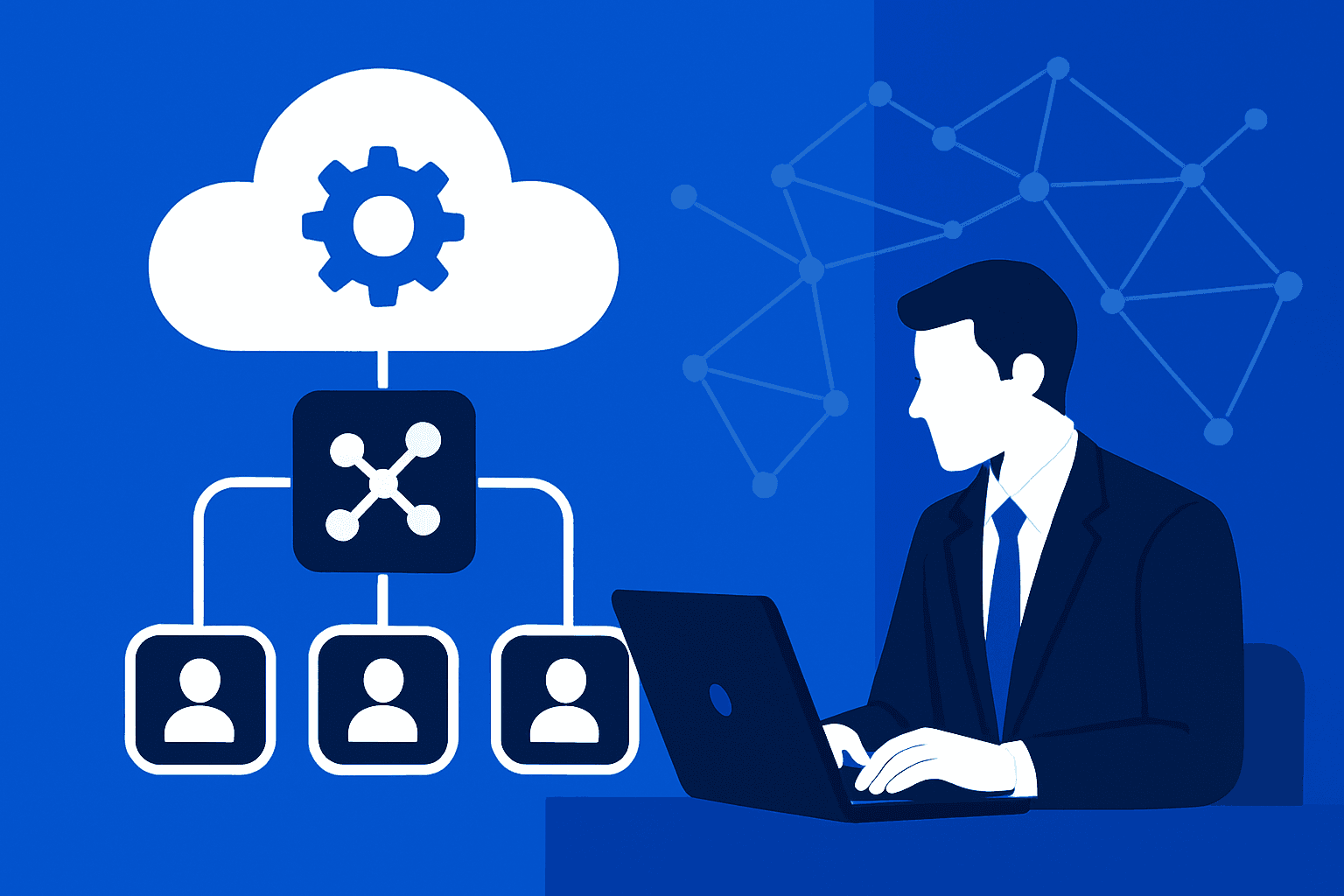
Enterprise AI agents are no longer confined to demonstrations, pilots, or isolated productivity experiments. Box’s 2026 enterprise AI survey found that 83% of enterprises are running agents in some capacity. Yet that progress exposes a practical constraint: an agent becomes useful only when it can securely interact with the systems where work, records, approvals, and transactions actually live.
That is why managed connector platforms are emerging as the missing layer for enterprise agent deployments. The difficult problem is not simply giving a model an API call. It is operating durable, permission-aware, observable connections as authentication changes, APIs evolve, traffic grows, policies tighten, and more agents begin acting across finance, procurement, HR, customer systems, and internal knowledge sources.
Enterprise agent adoption has made integration an operational bottleneck
The market signal is clear: enterprise agents are advancing into production before many organizations have established a repeatable way to govern their connections. Box identifies integration and security as major challenges even as agent use expands. This is an important distinction because an agent that cannot reliably reach approved enterprise tools has limited business value, while an agent that can reach them without adequate controls creates a serious operational and security concern.
Paragon’s 2026 State of Agentic Integrations report describes the same shift from the integration side. It says that 81% of B2B SaaS companies have shipped or are actively building AI agents that act through integrations, compared with 25% in 2025. The rapid change matters less as a line than as an architectural warning: the number of agent-to-system relationships can grow faster than the teams responsible for identity, integrations, and governance can safely manage them.
An agent is defined by what it can do, not only what it can say
For an enterprise, an agent that summarizes a document and an agent that updates a supplier record are not equivalent risk categories. The latter may access a system of record, use delegated credentials, trigger a workflow, and create downstream effects. Its connector is therefore part of the agent’s effective capability boundary.
That boundary is dynamic. A connector can be healthy when it is first deployed and later fail or become inappropriate when an API version changes, an authorization scope changes, a service account is modified, or an internal policy changes. Production readiness requires a way to manage that lifecycle rather than treating connectivity as a one-time development task.
The enterprise challenge is not merely connecting agents to tools. It is deciding which connections are allowed, under what identity and scope, with what runtime controls, and how those decisions remain enforceable as the environment changes.
This is the core reason a managed connector platform deserves attention. It places a deliberate operational layer between agent logic and enterprise systems. That layer can make the connection estate more governable without requiring every agent team to independently solve authentication, API maintenance, authorization design, logging, and failure handling.
Why embedded connectors do not scale with agent deployments
Teams often begin with a direct approach: an application team adds SDK calls, API clients, credentials, and tool definitions into the agent service. That can be suitable for a narrow, low-risk prototype. It becomes much harder to sustain when multiple agent teams connect to the same business applications, each one makes slightly different authorization choices, and each integration has its own operational behavior.
Paragon reports that agent projects stall on integration failures, particularly authentication changes, API drift, and volume spikes. These are not unusual edge cases. They are recurring conditions of operating integrations over time. When every team owns its own connector implementation, the maintenance work is duplicated and the probability of inconsistent controls rises.
The recurring costs hidden behind a “simple” tool call
Authentication upkeep:
credentials, consent, tokens, scopes, and authorization flows must continue to work as identity settings change.
API lifecycle management:
integrations need attention when APIs change behavior, fields, limits, endpoints, or versions.
Scale resilience:
higher agent activity can create volume spikes, retries, rate-limit pressure, and duplicate-action risks.
Policy consistency:
teams need a consistent interpretation of which tools, actions, and data paths are permitted.
Operational evidence:
security, compliance, and incident-response teams need usable records of what was attempted and what occurred.
None of these concerns is solved by model quality alone. A more capable model may create more useful requests, but it does not automatically keep OAuth flows current, distinguish allowed from prohibited connector use, or explain a transaction after the fact. Those are integration and control-plane responsibilities.
A managed connector platform centralizes this recurring work. Centralization should not mean indiscriminate access through one broad gateway. Instead, it should mean that common connection patterns, approved integration configurations, upkeep processes, and policy enforcement can be managed in one place while each agent receives only the permissions it needs.
Connector sprawl becomes agent sprawl
Gartner’s April 2026 guidance projects that by 2028 the average global Fortune 500 enterprise will have more than 150,000 agents in use, compared with fewer than 15 in 2025. Whether an organization reaches that level or not, the direction of travel is consequential: even a modest increase in agents can multiply connectors, identities, permissions, tool definitions, workflow paths, and ownership questions.
An enterprise should therefore avoid evaluating a connector as an isolated technical feature. It should evaluate the future estate: how many agents may call it, which identities they will use, how access will be revoked, which actions require additional safeguards, and how failures will be detected. A managed layer helps turn those questions into reusable operating practices rather than project-by-project exceptions.
Controlled connectivity is the real missing layer
Calling this a connector problem can be misleading if “connector” suggests only transport between two APIs. Enterprise deployments need controlled connectivity. The missing layer must combine connection reliability with identity-aware access, permissioning, policy enforcement, observability, and an operational process for keeping integrations current.
Gartner explicitly includes defining permitted connectors in agent governance and policies. That guidance is significant because it moves connectors from an implementation detail into the governance model. If a connector determines which enterprise system an agent can reach, then connector permissioning is part of determining what that agent is authorized to do.
What a managed connector layer should make possible
Approved connection patterns.
Teams can use reviewed connectors and supported authorization approaches rather than repeatedly creating unreviewed direct integrations.
Scoped access.
An agent can be granted access appropriate to its assigned task instead of receiving an overly broad set of system capabilities.
Central policy application.
Connector permissions can be aligned with governance decisions about which systems and actions are allowed.
Lifecycle ownership.
Authentication changes, API drift, and scale issues have a clear operating home rather than becoming orphaned maintenance work.
Traceable operations.
The organization can design for audit and investigation across agent actions, connector requests, approvals, failures, and outcomes.
These are design objectives, not a claim that every product labeled a managed connector platform provides them equally. Enterprise buyers should validate the capabilities that matter in their own environment. In particular, they should ask whether the platform’s controls are enforceable at runtime, whether identity and authorization behavior can be reviewed, and whether records are sufficiently useful for audit and incident response.
The distinction matters because an integration catalog alone is not enough. A catalog can improve developer convenience, but it does not by itself establish who can use a connector, which credentials are used, what the connector can do, or how the organization responds when the underlying system changes. Controlled connectivity is the architecture and operating model surrounding the integration, not just the list of available tools.
Identity is where agent permissions become real
Okta’s 2026 Businesses at Work report frames readiness for AI agents as readiness for identity security. It also notes that 82% of businesses describe their agent usage as moderate or limited. Taken together, those findings suggest that many organizations are still early enough to make deliberate identity decisions before their agent estates become difficult to unwind.
The Cloud Security Alliance’s February 2026 survey on securing autonomous AI agents identifies a growing gap between agent adoption and enterprise readiness, with IAM challenges central to the issue. This should not be surprising. When an agent acts through a connector, the enterprise must answer basic but consequential questions: whose authority is being used, what can that authority access, when is it valid, and how is it withdrawn?
Do not treat an agent identity as a generic technical credential
A durable design separates the agent’s purpose from the permissions available to it. An HR-oriented agent, for example, should not acquire broad access simply because it may need to complete a particular workflow. A procurement agent should not be able to perform actions outside the approved bounds of its role just because a shared integration credential makes those actions technically possible.
Managed connector platforms can support this discipline when they are designed to work with enterprise identity practices rather than bypass them. The goal is to connect agent actions to managed authorization decisions, scoped access, and reviewable ownership. It is not to create a new unmanaged pool of powerful credentials behind an AI interface.
Questions security and platform teams should ask
Which human, service, or delegated identity is used when the agent invokes this connector?
Can permissions be limited to the minimum actions and data needed for the agent’s defined task?
How are credentials stored, renewed, rotated, revoked, and monitored?
Can access be disabled quickly for one agent, one connector, or one workflow without disabling unrelated work?
Can owners identify the business purpose, technical owner, and approving authority for each connection?
Are authentication and authorization failures visible as operational signals rather than discovered only after a business process breaks?
These questions do not eliminate risk, but they expose whether an enterprise is building a managed capability or accumulating hidden obligations. Identity is not a separate workstream to be addressed after agent functionality is complete. It is one of the mechanisms that defines what an agent can safely do in production.
Connectors are now part of the AI security attack surface
The security case for managed connectors is not limited to access hygiene. The Cloud Security Alliance’s 2026 enterprise AI agent security survey says nearly half of organizations report experiencing an AI agent-related security incident. This finding makes it difficult to treat agent security as a future-only concern.
A 2026 security paper on AI agents maps attack surfaces across tools, connectors, hosting boundaries, and multi-agent coordination. It highlights indirect prompt injection and cascading workflow failures. In practical terms, a connector can become the path through which untrusted content influences an agent, an action reaches a sensitive system, or one flawed step propagates through a larger workflow.
Why tool access changes the security model
Traditional concerns about model output often focus on inaccurate, unsafe, or inappropriate text. Once an agent can act through connectors, the concern expands to transactions and side effects. The relevant security question becomes not only “What did the model say?” but also “What did the agent attempt, what was it allowed to do, what system state changed, and what subsequent processes were triggered?”
Netskope’s 2026 AI Report describes a shift from discovering shadow AI to active, transactional governance of autonomous AI agents. That framing is useful because it reflects the operational reality. Enterprises need controls that apply to actions in motion, not solely inventories of AI tools discovered after deployment.
Security controls should be designed around the action path
A managed connector layer can provide a natural point to apply and verify action-path controls. It should be considered alongside, not as a replacement for, secure model deployment, application security, data governance, network controls, and human oversight. The connector layer is valuable precisely because it sits at a point where an agent’s intent is translated into a request against an enterprise system.
Constrain tool availability:
expose only approved connectors and allowed actions to each agent or workflow.
Use policy-aware authorization:
ensure access reflects the agent’s role, assigned purpose, and relevant business rules.
Plan for unsafe instructions:
treat data and content arriving through tools as potential inputs that can influence agent behavior.
Capture operational context:
retain evidence needed to understand requests, failures, approvals, and completed actions.
Limit blast radius:
design connections so that a compromised or misbehaving agent cannot automatically reach every system or execute every available operation.
No single layer can guarantee that an agent will behave safely. However, leaving connectors embedded and inconsistently governed removes one of the most practical places to limit capabilities and observe transactions. Managed connectivity is valuable because it gives enterprises a more consistent control point as their tool-using agent population grows.
Governance must extend into finance, procurement, and HR
Pathlock’s 2026 AI Governance Gap Report says enterprises are deploying agents into finance, procurement, and HR faster than they are building the governance infrastructure required to manage them. These functions raise the stakes because agent interactions may affect payments, vendor processes, employee data, approvals, or records that carry legal, financial, and operational significance.
In these settings, governance cannot remain a high-level set of principles. It has to become a set of implementation decisions: which connector is permitted, which action is permitted, who owns the integration, what approval is required, what evidence must be retained, and what occurs when a connector or policy changes.
From governance statements to operating decisions
A 2026 paper on secure AI estates concludes that existing enterprise governance frameworks articulate principles but do not provide implementable architectures for multi-agent enterprise deployments. That gap helps explain why organizations can agree that AI should be secure, accountable, and governed while still struggling to make those ideas enforceable across real applications.
A managed connector platform does not replace governance frameworks, risk decisions, or process owners. It can make those decisions more implementable by providing a common location for approved connections, permission boundaries, operational ownership, and monitoring expectations. In that sense, it functions as a bridge between policy and the transaction an agent is about to perform.
A practical governance model for connector-enabled agents
Classify the business action.
Distinguish read-only assistance, data updates, workflow initiation, approvals, and other consequential operations.
Identify the system owner.
The owner of a finance, procurement, HR, or other business system should have a defined role in deciding connector access and acceptable use.
Define allowed connector capabilities.
Specify not only the target system but also the permitted actions and boundaries for each agent use case.
Associate accountable identities.
Establish how authorization is granted and which team is responsible for maintaining it.
Set runtime oversight expectations.
Decide which actions need logging, review, escalation, or additional approval based on risk.
Review change and retirement paths.
Account for API changes, access revocation, connector deprecation, agent redesign, and incident response.
This model is deliberately operational. It gives enterprise architecture, security, identity, platform engineering, application teams, and business owners shared objects to govern: agents, connectors, actions, identities, and outcomes. Without that shared model, governance can fragment across tickets, spreadsheets, source repositories, and undocumented assumptions.
Observability and auditability matter because behavior changes over time
The enterprise risk associated with agents is not limited to a single prompt or output. Multiple 2026 governance and security reports emphasize observability, auditability, and runtime oversight for production agents. This emphasis follows naturally from the fact that the operational environment changes: users change requests, source systems change interfaces, identity policies change, agents are updated, and workflows interact in unforeseen ways.
Connector behavior is especially important to observe because it translates an agent’s plan into external impact. A failed call may indicate ordinary API maintenance. Repeated unauthorized requests may indicate a misconfiguration. An unusual sequence of actions may indicate a workflow design problem, a compromised account, or an agent operating beyond its intended boundary. These possibilities cannot be evaluated well if connector operations are opaque or scattered across disconnected implementations.
Useful evidence is more than a generic activity log
Enterprises should define what evidence they need for their risk profile and regulated obligations. In many cases, that includes enough context to connect an agent, an identity, a connector, a requested action, a policy or approval state, and an outcome. The objective is not indiscriminate collection. It is the ability to reconstruct material activity and make defensible operational decisions.
Managed connector platforms can simplify this work by normalizing how interactions are mediated and recorded, but implementation details matter. Teams should test whether available telemetry can support real investigations and operational troubleshooting, rather than assuming that a dashboard alone creates auditability.
Runbooks are part of the architecture
Observability only delivers value when people know what to do with the signal. Before scaling an agent, teams should decide who handles authentication breakage, API changes, repeated failed actions, suspicious connector use, and business-system incidents. These runbooks should identify the responsible platform, identity, application, security, and business stakeholders.
For enterprise agents, operational maturity means being able to answer both “Can this agent act?” and “What happens when that action path changes, fails, or becomes unsafe?”
This is another reason managed connectivity is a missing layer rather than a convenience feature. It creates an opportunity to standardize the operational interface between agent teams and the systems they depend on. The result can be fewer bespoke maintenance paths and clearer accountability when conditions change.
How to introduce a managed connector platform without creating another silo
The right adoption path is not to connect every agent to every system through a new centralized service. That approach can reproduce the very sprawl it intends to fix. A better path starts with a defined set of high-value, repeatable integrations and builds governance, ownership, and operational practice alongside the technical platform.
Paragon’s reporting is particularly relevant here: keeping integrations alive through authentication changes, API drift, and scale spikes is a recurring cost center. Organizations should use that reality to prioritize. Begin where the same connector patterns are being rebuilt by multiple teams, where systems are business-critical, or where direct integrations are creating inconsistent identity and maintenance practices.
A phased implementation approach
Inventory existing agent connections.
Identify active agents, planned agents, target systems, connector owners, identities, permissions, and critical workflows. The inventory should include direct integrations already hidden within application code.
Prioritize by business impact and control need.
Start with connections that are widely reused, operationally fragile, or linked to sensitive systems. Avoid treating all integrations as equally risky or equally urgent.
Define a connector approval standard.
Establish the technical, identity, security, privacy, and business-owner criteria required before a connector is made available to agents.
Build least-privilege connector profiles.
Align agent access to specific tasks and avoid broad default capabilities. Review whether the connector exposes only the actions required for the use case.
Establish monitoring and response.
Decide what activity is logged, what patterns are reviewed, and how teams respond to changes, errors, and suspected misuse.
Measure operational friction.
Track recurring integration maintenance work, time spent resolving failures, and gaps discovered during reviews. Use these findings to improve the shared layer and its standards.
Platform teams should also resist turning centralization into a bottleneck. The aim is to provide secure, supported self-service within explicit boundaries. Clear connector templates, documented ownership, pre-approved patterns, and predictable review processes can help product teams move quickly without sidestepping governance.
Selection criteria should be evidence-based
When assessing a managed connector platform, enterprises should validate practical capabilities rather than relying on broad assurances. Relevant areas include support for the systems that matter most, authentication and authorization options, permission granularity, lifecycle maintenance practices, runtime policy enforcement, audit and observability features, incident-response support, and alignment with existing identity and security architecture.
It is equally important to clarify responsibility boundaries. A platform may manage connector infrastructure, but the enterprise still owns its policy decisions, business approvals, data handling rules, agent design, and risk acceptance. Trustworthy deployment depends on understanding those boundaries before incidents or outages reveal them.
The strategic case: make agent growth governable
Gartner’s projection of large-scale agent growth illustrates why connector architecture is a strategic concern. If enterprises move toward substantially larger agent populations, manually governed, separately embedded connections will become increasingly difficult to maintain. The issue is not only the number of agents. It is the multiplication of relationships among agents, identities, tools, data, policies, and business processes.
Managed connector platforms offer a practical way to reduce that complexity. They create a dedicated layer for controlled connectivity, where organizations can centralize recurring integration upkeep while applying consistent expectations for permissions, ownership, observability, and change management. That does not remove the need for capable agent engineering or robust security programs. It makes those efforts more sustainable by preventing every project from rebuilding the same sensitive infrastructure.
What leadership should expect from the operating model
A clearer view of which enterprise systems agents can reach and why.
More consistent treatment of connector permissions as a governance decision.
Less duplicated effort handling common authentication, API-change, and integration-maintenance problems.
Better alignment between agent deployment, identity security, business-system ownership, and runtime oversight.
A stronger foundation for scaling agents without accepting uncontrolled connector sprawl.
The evidence from 2026 points in the same direction. Enterprise agent adoption is growing; integration and security remain major obstacles; IAM readiness is lagging; incidents are already being reported; and governance is shifting toward the transactional oversight of autonomous actions. A durable, secure, permission-aware connector layer is therefore not peripheral infrastructure. It is a key part of making enterprise agents operationally credible.
Managed connector platforms are the missing layer because they address the space between an agent’s reasoning and an enterprise system’s authority. They help organizations treat connectors as managed capabilities rather than incidental code, turning agent access into something that can be approved, maintained, observed, and revised as APIs, identities, policies, and business needs evolve.